Squash is one of the fastest-paced racket sports in the world: two players share the same floor inside a court enclosed by four walls, and strategy and high fitness go hand in hand. A single 45-minute session burns hundreds of calories, testing your decision-making reflexes while pushing your cardiovascular capacity to its peak. The momentum the sport has gained worldwide since it was officially added to the Los Angeles 2028 Olympic Games programme has put squash back in the spotlight among racket sports fans in Türkiye too.
If you are new to squash or planning to step onto a court, knowing the basic rules, the safety requirements, the types of ball and how to find a playing partner at your level in Türkiye will make the process much easier.
What is squash and how does it differ from other racket sports?
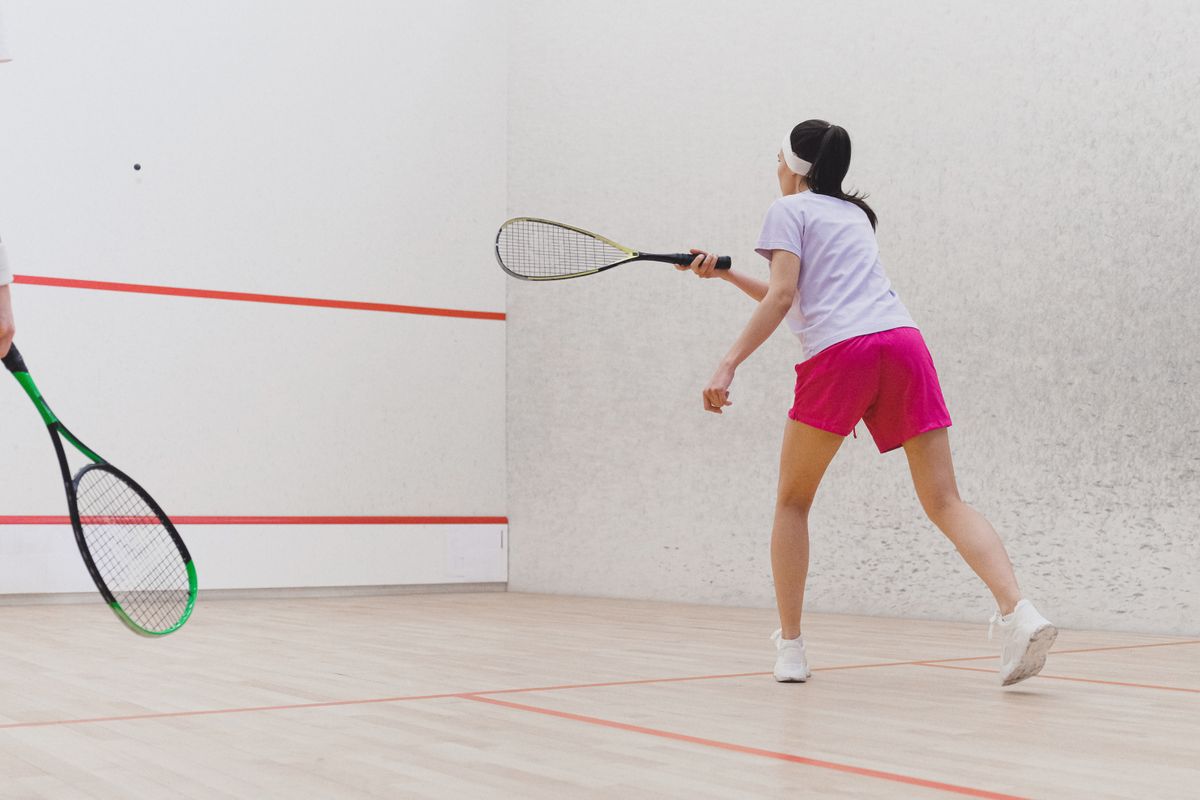
Squash is an indoor sport that originated in 19th-century England and gradually acquired a global set of rules. Unlike many racket sports, the players do not stand on opposite sides separated by a net; instead, they share the same court space.
The key building blocks that set squash apart from sports such as tennis, padel, badminton and pickleball are:
Key differences
- A shared space and four walls: Tennis, badminton and pickleball are played on either side of a net on outdoor or indoor courts, while squash is played on a court enclosed by walls on all four sides. In padel the walls and glass are part of the game too, but padel players stand on either side of a net; in squash there is no net and the two players move shoulder to shoulder on the same floor.
- Where you aim: In squash the ball is not hit straight into the opponent's half but against the front wall. The side and back walls are used as strategic support to change the angle of a shot, keep the ball in play or wrong-foot the opponent.
- Ball and racket: Tennis and padel balls are pressurised and bounce high, while a squash ball is made of small, light, hollow rubber. When cold it barely bounces at all; as it warms up from being hit, its elasticity and bounce increase. A squash racket is much lighter than a tennis racket, with a smaller head and a thinner frame; compared with a badminton racket it has a sturdier frame.
- Format: Squash is almost always played as singles (one against one). Because of the court's physical limits and player safety, doubles is rarely played, except in quite exceptional cases and on special wider courts.
The table below sums up the main characteristics of the popular racket sports:
Squash compared with tennis, padel and pickleball| Criterion | Squash | Tennis | Padel | Pickleball |
|---|
| Playing area | Indoor court enclosed by four walls | Outdoor or indoor court (with a net) | Glass and mesh court (with a net) | Small hard court (with a net) |
|---|
| Ball | Small, rubber (needs warming up) | Felt-covered pressurised ball | Low-pressure, tennis-like ball | Hard plastic ball with holes |
|---|
| Common format | Singles (1 v 1) | Singles and doubles | Doubles (2 v 2) | Doubles and singles |
|---|
| Pace and fitness | Very high, non-stop rallies | High, bursts of explosive power | Medium to high, reflex-driven | Medium pace, hand-eye coordination |
|---|
Basic squash rules: from the serve to the scoring system
Understanding the rules is essential when you start playing squash: it keeps everyone safe on court and lets you sustain a smooth rally. The game's international framework is based on the standards of the World Squash Federation.
The court lines and the front wall
The front wall is the heart of the court, and it has three horizontal lines:
Lines on the front wall
- The tin (board): The roughly 48-centimetre zone at the very bottom of the front wall, covered in metal or a composite. When the ball hits it, it makes a distinctive sound and the ball is immediately out. It works like the net in tennis.
- The service line: The line across the middle of the front wall. It only counts on the serve.
- The out line: The boundary running along the top of the front wall, the side walls and the back wall. Any shot that touches the line or goes above it is out.
The serve and how shots work
When serving, at least one of the server's feet must stay inside the service box on the floor. The serve must go straight to the front wall and hit it above the service line and below the out line. On its way back from the wall, the ball must land in the back quarter of the court where the receiver stands, either in the air or after bouncing on the floor at most once.
After the serve the aim is simple: the ball must reach the front wall. It may hit the side or back walls before it gets there, but directly or indirectly it has to reach the area above the tin. The ball may bounce on the floor no more than once; the player whose turn it is must hit it before it bounces twice.
The scoring system (PAR-11)
Squash matches use the modern rally scoring system (Point-a-Rally, PAR-11). In this system every rally won earns 1 point directly, no matter who served.
Scoring rules
- Games are played to 11 points.
- When the score reaches 10-10, one side has to get at least 2 points ahead to win the game (for example 12-10 or 14-12).
- Official matches are usually won by the first player to take three games out of five (best of 5), and recreational matches by the first to take two out of three.
Safety first: let and stroke decisions
Because both players share the same court, preventing accidents is at the heart of the rules. The player whose turn it is to hit must be free to move directly to the ball, swing the racket and send the ball to the front wall.
Referee decisions
- Let (the rally is replayed): If the opponent accidentally gets in the way as a player goes for the ball, and the player holds back the shot for safety, the situation ends in a let. The rally is then replayed and no point is awarded.
- Stroke (point awarded): If the opponent's body blocks the striker's clean line to the front wall, or the interference makes a proper shot completely impossible, the point goes straight to the player who was obstructed. This decision keeps players from crashing into each other. The official squash rules cover the finer interpretations.
Squash balls and warming them up
Squash balls carry coloured dots, and the dots show how fast the ball is and how much it bounces:
Types of ball
- Double yellow dot: The standard for professional and advanced players. These are the balls used in PSA Squash Tour events. It bounces the least and demands the most effort.
- Single yellow dot: Suits intermediate club players; a little livelier than the double yellow.
- Red dot: Designed for players moving from beginner to intermediate; it bounces a lot.
- Blue dot: For complete beginners. It is slightly larger and bounces well even when cold, so rallies don't end straight away.
Why must the ball be warmed up?
The air inside a squash ball heats up as it is compressed by hard hits. Before it warms up, the ball barely bounces off the floor and play can't flow. That is why, before a match, the rules have both players spend about 4-5 minutes on court hitting the ball hard against the wall to bring it to the right temperature and elasticity.
Safety and beginner gear
On court the ball can sometimes travel at more than 200 kilometres per hour. That is why the right gear is essential not just for performance but to avoid injury.
Essential gear
- Protective eyewear: Polycarbonate protective eyewear is one of the most important safety items on a squash court. It protects the eyes from a racket strike or a ball hitting the face directly. Eyewear is mandatory at many clubs around the world and in junior categories.
- Non-marking indoor court shoes: To avoid damaging the wooden floor and to keep your grip on court, wear indoor court shoes with non-marking soles. Running shoes are never allowed on squash courts because of their soles and the black rubber marks they leave.
- Squash racket: For beginners, models with a slightly larger head (teardrop or a classic open throat), a light balance and a sturdy aluminium or graphite build are recommended.
On a beginner's budget you can put together a reasonable set: a basic racket, protective eyewear, a few blue- or red-dot practice balls and indoor court shoes.
Where to play squash in Türkiye, and why level matters
Squash infrastructure in Türkiye is steadily developing. Courts are usually concentrated in places like these:
Where the courts are
- Large private sports clubs in the big cities
- Indoor areas of some chain or boutique fitness centres
- University sports complexes
- Large hotels that host foreign guests and have extensive sports facilities
In squash, playing with a partner at a similar level is vital. A match between an advanced player and someone who can't yet send the ball to the wall consistently isn't fun: rallies don't last and neither side gets much out of the practice. That is why ladder rankings and in-club leagues that group players of similar skill are common at local clubs.
Modern ways to find a playing partner and a coach
The biggest problem for people who want to play squash is finding a partner to get on court with, because the player pool is more niche than in tennis. Club notice boards and coach referrals have traditionally been used, but today sports technology makes the process much more practical.
Mobile matching apps that focus on racket sports, such as Racket Crush, bring different sports together under one roof and close the partner gap around players:
How it works
- Several sports in one profile: Besides tennis, padel or badminton, users can also add squash to their profile. At sign-up players state their own level; it doesn't change automatically based on complicated match results, so it stays clear and simple.
- Discovering players nearby: The apps' discover screen lists athletes nearby based on location. Player cards clearly show which sports a person plays and their level.
- Direct messaging and arranging a time: When you match with a player you like, you can message each other to agree on a suitable day and time. Court booking is done by the players themselves, directly with the facility.
- Coach directory: Players who want to improve their technique can filter the in-app coach directory by sport to look for squash coaches.
Without complicated payment systems or points calculations, these platforms essentially do one job: bringing people who love the same sport together on court.
WITH RACKET CRUSH
Find your squash partner
Add squash to your profile → pick your level → discover players near you → match and arrange the game by message.
Download the appFrequently Asked Questions
- Is squash hard to play?
- When it comes to keeping the ball in play with basic shots, squash is easier than tennis at first, because the walls stop the ball from getting away and blue-dot balls bounce plenty. As you progress, though, it demands non-stop movement, so it is physically very demanding on fitness and leg strength.
- What is the main difference between squash and tennis?
- In tennis the players stand on opposite sides of a net and try to land the ball inside the lines on the other side, where it may bounce only once. In squash there is no net; the two players share the same floor and take turns hitting the ball against the front wall. The side and back walls are part of the playing area too.
- Can you practise squash on your own?
- Yes, squash is one of the best racket sports for practising alone. Hitting against the front wall by yourself to work on keeping the ball parallel to the wall (rails or drives) and on your volley reflexes is an essential part of individual improvement routines.
- Do you have to wear protective eyewear on a squash court?
- Because the small rubber ball moves at high speed and the players swing their rackets close to each other, there is a risk of eye injury. Many federations and sports clubs around the world make polycarbonate protective eyewear mandatory for safety, especially for beginners and juniors.