SHARE

What Is Pickleball and How Do You Play? Rules, Gear and Finding Partners

A beginner's guide to pickleball: how it differs from tennis, padel and badminton, the underhand serve, two-bounce and kitchen rules, scoring, gear and finding people to play with.

October 11, 20268 min read
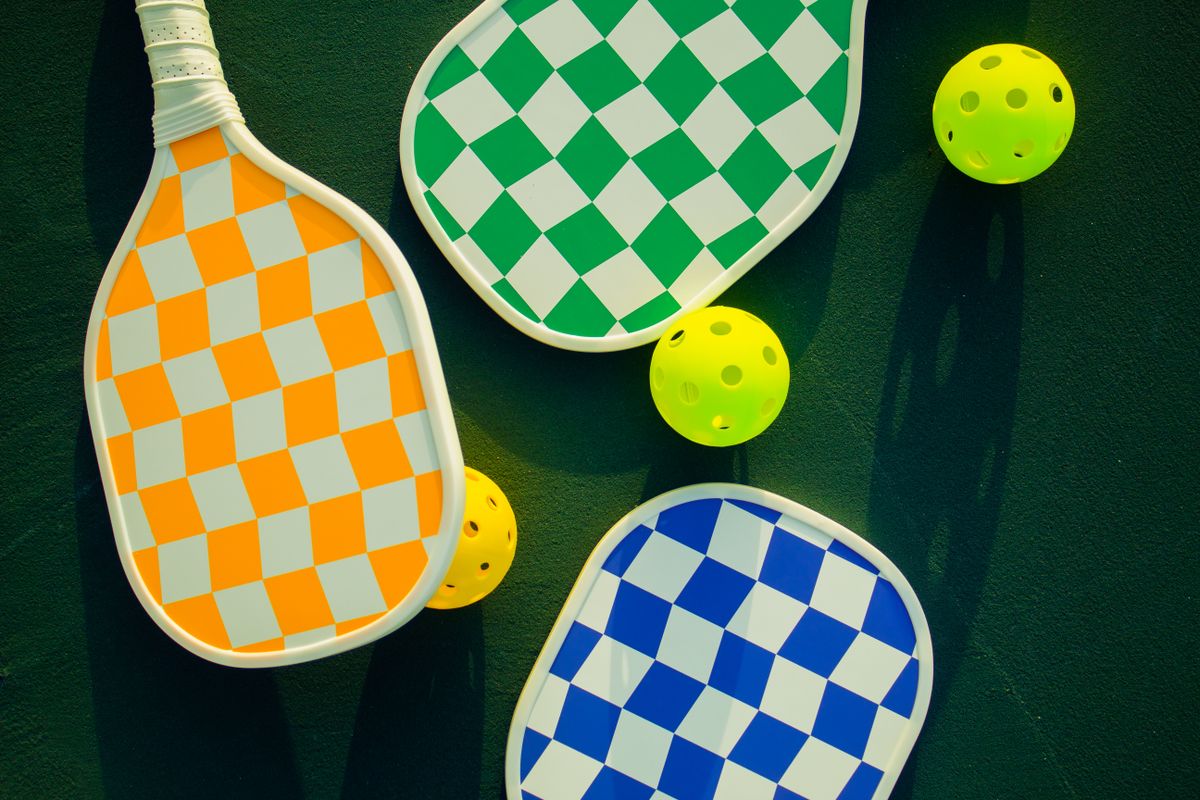
Three checkered pickleball paddles and yellow perforated balls

What is pickleball?

Pickleball is a racket sport that borrows from tennis, badminton and table tennis. It began in 1965 in a family's backyard in the United States, played with table tennis paddles and a perforated plastic ball; today it is often listed among the fastest-growing sports in the US and is spreading across Europe. In Türkiye it is still new, but the name comes up more and more at tennis clubs and sports halls. The game is played on a badminton-sized court with a solid, stringless paddle and a plastic ball with holes, as singles or doubles. Three reasons explain the buzz:

  • Easy to learn: rallies on day one
  • Small court: less running, less strain
  • Social: four players up close in doubles

How it differs from tennis, padel and badminton

A pickleball court measures 6.10 × 13.41 metres (20 × 44 feet): the same size as a badminton doubles court and roughly a third of a tennis court, so several pickleball courts can be lined inside one tennis court. The net is 91.4 cm (36 in) high at the sidelines and 86.4 cm (34 in) in the middle, a little lower than a tennis net. The paddle is solid and stringless, faced with wood, composite or carbon. The ball is hard, perforated plastic; it slows down in the air, so rallies last. The serve is always underhand, which makes it hard to win points straight off the serve and turns the game into a battle of placement from the first shot.

Pickleball compared with tennis, padel and badminton
FeaturePickleballTennisPadelBadminton
Court size6.10 × 13.41 m10.97 × 23.77 m (doubles)10 × 20 m6.10 × 13.40 m (doubles)
RacketSolid, stringless paddleStrung racketStringless, perforated racketLight, strung racket
BallPerforated hard plasticFelt-covered, pressurisedFelt-covered, lower pressureFeather or nylon shuttlecock
ServeUnderhand onlyUsually overheadUnderhand, below the waistUnderhand
Playing areaIndoor or outdoor, no wallsIndoor or outdoor, no wallsEnclosed by glass and mesh wallsMostly indoor halls

Rule 1: The serve is underhand

The server stands behind the baseline and strikes the ball with an upward arc, with the paddle below waist level at contact. The serve goes diagonally into the opposite service court and must clear the kitchen in front of the net. Dropping the ball and hitting it after the bounce (the drop serve) is also legal.

Rule 2: The two-bounce rule

The receiving side cannot volley the serve; the ball must bounce once first. When the return comes back, the serving side must also let it bounce once on their side. After those two bounces, players may hit the ball either after a bounce or in the air. The rule stops the server from rushing the net to finish the point and evens out the opening shots.

Rule 3: The kitchen (non-volley zone)

On each side of the net there is a zone 2.13 metres (7 feet) deep; its official name is the non-volley zone, and players call it the kitchen. You may not volley while standing in it or on its line. Stepping into the kitchen is allowed, for example to play a ball that has bounced there; what is forbidden is volleying from inside it. Losing your balance after a volley and touching the kitchen also counts as a fault. The rule limits smashes at the net and shifts the game towards patient, soft shots that drop into the opponent's kitchen (dinks).

Scoring: singles and doubles

In traditional scoring only the serving side can win a point; if the receiving side wins the rally, they win the serve, not a point. Games are usually played to 11, won by 2. In singles the score has two numbers (server's score first); the server serves from the right when their score is even and from the left when it is odd. In doubles the score has three numbers: the serving team's score, the receiving team's score and the server number (1 or 2). The team that starts gets only one serve, so the first call is 0-0-2; after that, both players on each team serve in turn. For the current official rules, see the USA Pickleball rulebook; some events are also trying rally scoring, where every rally wins a point.

Beginner gear

You do not need a big budget to start. Starter sets with two paddles and a few balls cost far less than advanced carbon-faced paddles, and in the first months you will not feel the difference of an expensive paddle. Balls are made separately for indoor and outdoor play: indoor balls usually have 26 holes and outdoor balls 40, and outdoor balls are harder and heavier to cope with wind. You do not need dedicated pickleball shoes; a non-marking tennis or court shoe that supports lateral movement is enough. Prices change often, so compare current prices across retailers.

Where can you play pickleball in Türkiye?

Dedicated pickleball venues are still rare in Türkiye; players mostly adapt existing spaces. A hard tennis court can host one or more pickleball courts with line tape and a portable net, and some tennis clubs have started to open pickleball hours this way. Indoor halls with badminton lines can be used with a portable net, since the dimensions are the same. Ask the venue in advance whether pickleball is allowed and whether they provide nets and balls.

How do you rate your level?

Worldwide, pickleball level is most often expressed with DUPR (Dynamic Universal Pickleball Rating). DUPR is calculated from match results and ranges from 2.000 to 8.000; beginners sit at the low end of the scale. If you have no recorded matches yet, an honest self-description is enough: if you are new to the paddle and ball, you are a beginner; if you can keep short rallies going and know the rules, you are improving; if you use the kitchen game and placement, you are intermediate. When in doubt, picking the lower level makes your first matches more enjoyable.

How to find a pickleball partner

The biggest hurdle in a new sport is that nobody around you plays it. Inviting friends who play tennis or badminton to try it is a good start; the rules take fifteen minutes to learn. You can also find people who play pickleball on Racket Crush. The app is free and covers tennis, padel, squash, badminton and pickleball. When you sign up you pick your level for each sport with a short survey; your level shows on your profile, you can update it any time, and it does not change automatically with match results. In Discover you see players near you and message the people you match with. You can open a 2v2 open match for doubles and accept the requests yourself. Courts appear on the in-app map; you book with the venue yourself. After a match one side enters the score and the other confirms or rejects it.

WITH RACKET CRUSH

Find your pickleball partner

Pick your level → discover players near you → create your open match → accept who applies.

Download the app

Frequently Asked Questions

Is pickleball hard to learn?
No. Pickleball is considered one of the easiest racket sports to pick up. The paddle is short and stringless and the ball is slow; the basic rules settle in after a short practice and most people can rally on their first day.
What ages is pickleball suitable for?
It is played across a wide age range, from children to older players. The small court means less long-distance running, but there are still quick changes of direction, so warm up properly and set a pace that suits your own health.
Can you play pickleball on a tennis court?
Yes. A hard tennis court can host a pickleball court with line tape and a portable net, and several pickleball courts fit in the area of one tennis court. Check with the venue first that this is allowed.
How many people play pickleball?
It is played as singles (one against one) or doubles (two against two). Doubles is the most common format: with four players close together, the game is more social and the net play livelier.
Is pickleball the same as padel?
No. Both use stringless rackets and an underhand serve, but padel is played on a 10 × 20 metre court enclosed by glass and mesh walls, with a felt ball that can be played off the walls. Pickleball is played on a smaller court with no walls, with a perforated plastic ball, and has its own two-bounce and kitchen rules.

Related posts