
SHARE

How to Find a Regular Tennis Partner: WhatsApp Groups or Apps?

If you've moved to a new city or nobody around you plays tennis: the pros and cons of WhatsApp groups and partner apps, setting your level honestly, arranging the first match and building a regular group.

October 10, 20266 min read
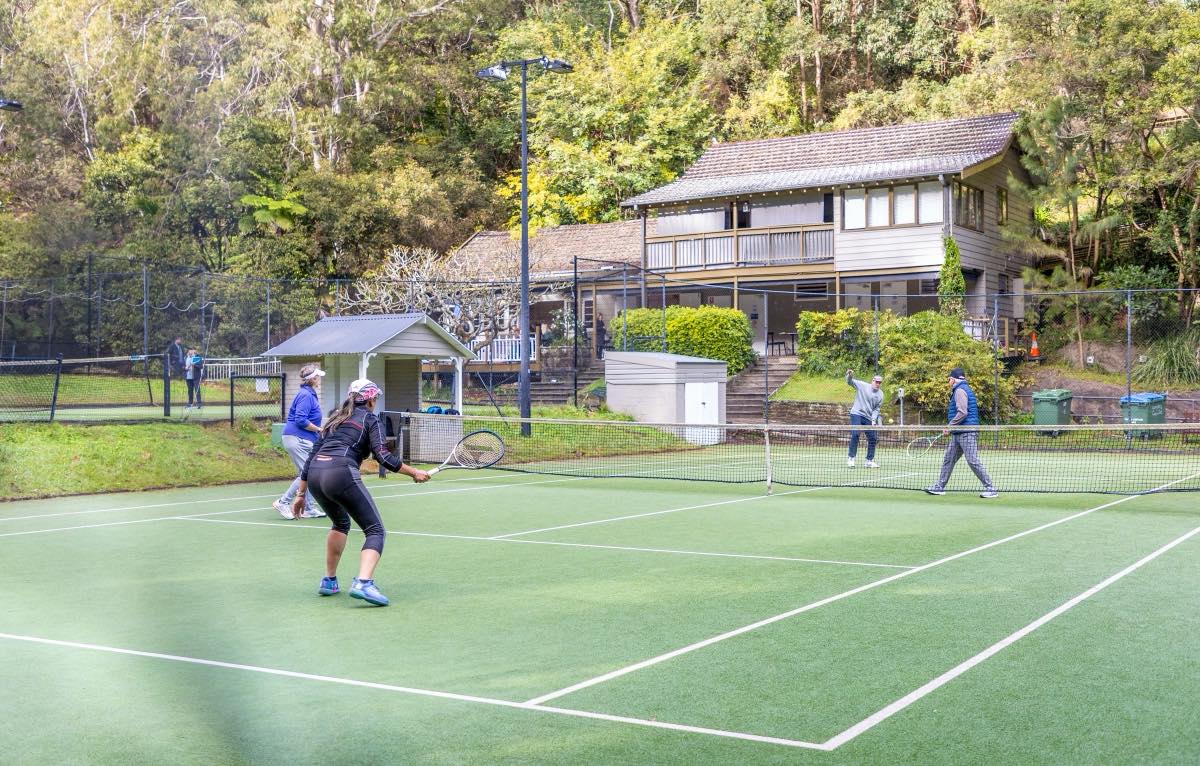
Four players in a doubles match on a tree-lined club court

Why is it hard to find a tennis partner?

In tennis the biggest obstacle is usually not the court but the person across the net. When you move to a new city, come back after a long break or simply have no one around who plays, courts suddenly feel out of reach. Joining a crowd is easy in football; in tennis two or four people's level, schedule and location all have to line up. Amateur players usually try one of two routes: WhatsApp and club groups, or partner-finding apps. Both have real strengths and weaknesses.

  • WhatsApp and club groups
  • Partner-finding apps
  • Both together: the sturdiest routine

What WhatsApp and club groups do well

Messaging groups run by clubs and tennis communities are free and reach dozens of people at once. In a busy, active group a message like "Anyone free to play at 6 pm today?" can get an answer within minutes. Members who use the same venue get to know each other, and local news such as court maintenance or club tournaments is shared there first. If you belong to a club, being in its group always helps.

Where WhatsApp groups fall short

In a group, someone's level is just how they describe it in the moment: "intermediate" can mean steady rallies to one player and a licensed past to another, which is where most 6-0, 6-0 matches come from. Match calls get lost among the day's chatter and it stays unclear who is actually coming. With last-minute cancellations the court fee often ends up on one person. And the bigger the group, the harder it is for admins to keep order.

What partner-finding apps offer

Partner apps tie the search to location and profiles. You see players near you and read their sports and stated level on their profile. You can open a singles (1v1) or doubles (2v2) match and wait for others to request to join; you decide who plays. Some apps also show courts on a map, but booking is usually done directly with the venue. One thing to keep in mind: on most apps the level is also the player's own statement, so choosing the right level is up to you either way.

WhatsApp groups compared with partner-finding apps
CriterionWhatsApp and club groupsPartner-finding apps
Level informationHow the person describes itLevel stated on the profile
Who you reachGroup members onlyPlayers near your location
Organising a matchBuried in messages, attendance unclearOpen match; you accept the requests
Court informationVenues members knowCourts on a map; booking with the venue
CostFreeVaries by app; some are free

Set your level honestly

Overstating your level leads to hard moments on court, and understating it gives you flat, uncompetitive rallies. International scales help you place yourself. The USTA's NTRP scale runs from 1.5 (beginner) to 7.0 (professional): 2.0–2.5 is a player still trying to keep the ball in play with an unreliable serve, 3.0–3.5 can rally steadily at medium pace but loses control against fast or spinning balls, and 4.0–4.5 is an advanced amateur with a strong serve, net play and a tactical plan. The ITF's World Tennis Number, and your national federation's ranking if you are licensed, can also guide you. When in doubt, choosing the level below tends to give you more enjoyable first matches.

Arranging the first match: court, safety and costs

Confirm the court through the venue's own booking channel, double-check the time with your partner and agree on payment beforehand. Plan the first match at a busy venue with lighting and staff around. A short confirmation message a few hours before cuts down cancellations. Splitting the court fee is an unwritten rule, and bringing a fresh can of balls is a good start. If playing singles with a stranger feels awkward, opening a 4-player doubles match lowers the social pressure and makes for an easier first experience.

How to build a regular playing group

Relying on a single partner makes your routine fragile: work, injuries and holidays get in the way. Build a small pool of 5–6 players you've enjoyed playing with, so the court never sits empty when you want two or three matches a week. A fixed day and time, say Tuesday and Thursday evenings, lets everyone plan around it. The best results usually come from combining both: find new players at your level through an app, then keep your regular crew together in your own small group.

How it works on Racket Crush

Racket Crush is free and covers tennis, padel, squash, badminton and pickleball. When you sign up you pick your level for each sport with a short questionnaire (Beginner, Improving, Intermediate, Advanced, Expert); it shows on your profile and you can update it from your profile any time — it does not change automatically with match results. In Discover you see players near you and message the people you match with. You can open a singles (1v1) or doubles (2v2) open match and you accept the requests. Courts appear on a map in the app, and you book them with the venue yourself. Your phone number is verified by SMS at sign-up, and you can block or report a user. After a match one side enters the score and the other confirms or rejects it.

WITH RACKET CRUSH

Find your regular tennis partner

Pick your level → discover players near you → open your match → accept who joins.

Download the app

Frequently Asked Questions

Which level should a tennis beginner choose?
If you are still learning the grip and basic forehand and backhand, choose the lowest level; on the NTRP scale that is roughly 2.0–2.5. On Racket Crush that is "Beginner". You'll match with similar players and improve without discouraging mismatches, and you can raise your level later from your profile.
How does court booking work on partner-finding apps?
Most partner apps show courts, but booking and payment are handled by the venue. On Racket Crush you also see courts on a map; once you agree on a time with your partner, you book the court with the venue yourself.
How should court and ball costs be split at the first match?
The court fee is usually split evenly. One player brings a fresh can of balls; alternatively one covers the court and the other the balls. Talking about it before the match is the smoothest way.
How can you reduce last-minute cancellations in WhatsApp groups?
Groups have no binding structure, so cancellations are hard to prevent entirely. Confirming one-to-one with people you have played with before and sending a short reminder a few hours before the match cuts them down noticeably.
Is Racket Crush free?
Yes. Racket Crush is free to download and use; discovering players, matching, creating matches and messaging cost nothing. Coaches set the price of their own lessons.

Related posts