
Tennis
Tennis Level Chaos: WhatsApp Groups vs Matchmaking Apps
We looked at the level chaos in WhatsApp tennis groups and at player matchmaking apps. Find the best way to set up balanced tennis matches.
November 3, 20268 min
Setting up a tennis or padel match with a stranger? Thorough tips for avoiding fake profiles, preventing no-shows and choosing a reliable partner.
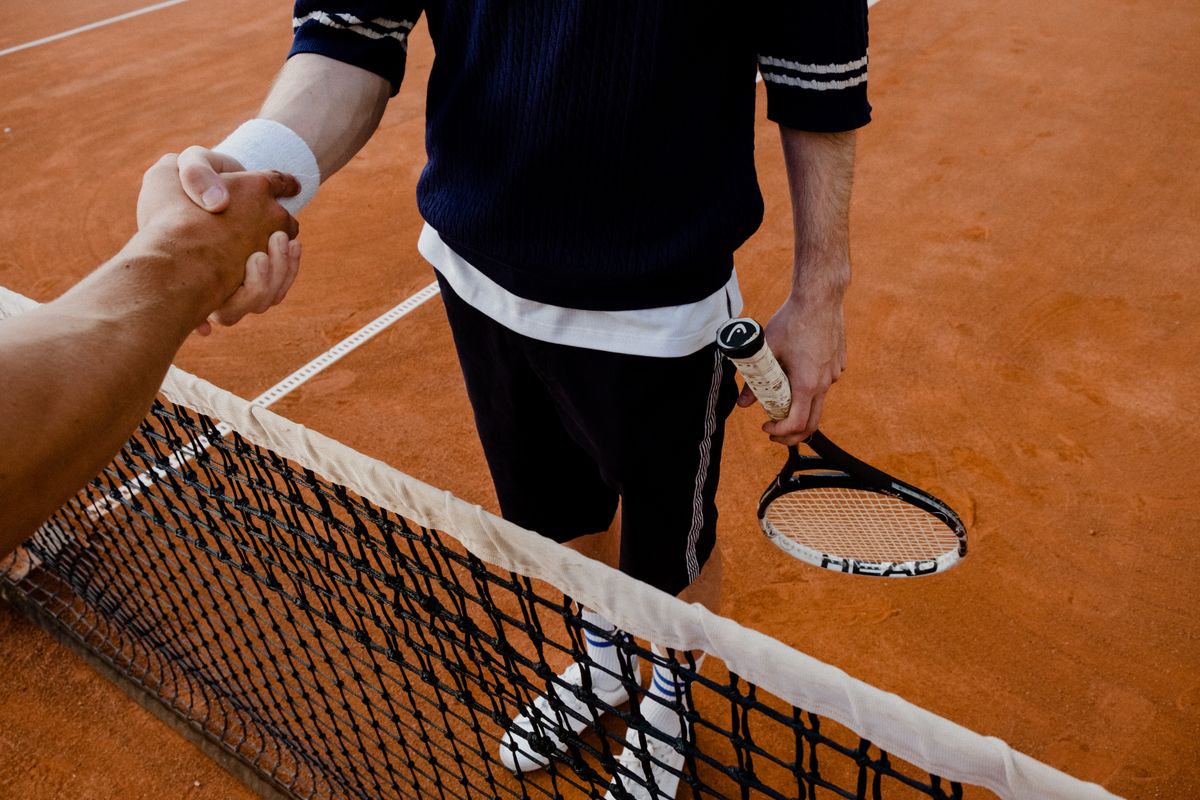
Racket sports, tennis above all and padel, whose popularity has grown fast in recent years, keep winning over a lively and social crowd of players in 2026. One of the biggest challenges for amateurs is finding a partner or opponent who suits their level, whose free hours overlap with theirs and who will compete fairly on court. Player communities, social media groups and sports partner apps offer practical answers to that search. But arranging a court date with someone you don't know also brings some safety risks and organisational hiccups.
Last-minute cancellations (no-shows) that leave you alone on court, inactive accounts you can never reach, or situations that cross personal boundaries can kill your enthusiasm for the game. Being careful when you find sports partners through digital channels is the key to protecting your time, your budget and your personal safety. In this guide we look at the risks an amateur racket sports player may run into on partner-finding platforms or in messaging groups, ways to spot fake profiles, strategies for preventing cancelled matches and the steps to take for a safe sporting experience.
One of the most common problems on opponent-finding platforms is profiles that are no longer used or were set up with false information. To avoid wasting time on such accounts, look closely at the profile details.
How much care someone puts into a sports platform usually shows in how complete their profile is. Be cautious with accounts that have no profile photo, a meaningless nickname in the name field, or no details at all about their racket sports background. To give a future partner an idea of what to expect, a real player usually states which hand they play with, their preferred style of play or their rough level on their profile. An empty profile may be an abandoned account, a sign that the player downloaded the app out of curiosity and deleted it soon after.
If you send a match invitation and hear nothing for days, or the replies are inconsistent and evasive, the account is most likely inactive. Reliable players get back to you quickly and clearly on practical details such as the venue, the date, the court surface and the balls to be used. Users who try to steer the conversation straight to personal topics away from the court, or who ask questions that have nothing to do with the sport, may also be a sign of a fake profile or abuse.
In amateur tennis and padel, one of the most frustrating situations is the "no-show": a player who simply does not turn up, without a word. Lost court booking fees and wasted time damage players' motivation. To keep this problem to a minimum, a few steps need to become habits.
Even when a match is planned days in advance, urgent work or an unexpected injury can come up in the normal course of life. Sending your partner a short confirmation message exactly one day (24 hours) before the match is a crucial precaution. A polite reminder such as "All good for our match tomorrow at 7 pm?" makes the other person look over their plans. If the player does not reply within a reasonable time, you can revise your plan or start looking for another player so you are not left alone at the last minute.
The booking and the court fee should be discussed openly from the very start. Agree who will rent the court, how the venue will be paid and how the fee will be split between the players. Court rental rules can differ between clubs under the Turkish Tennis Federation and municipal facilities. A payment plan that was never discussed can cause needless tension between the two sides after the match. If you are renting the court, make sure the other player has confirmed their share before the match.
Padel is mostly played in doubles, and under the rules of the International Padel Federation (FIP) the nature of the game requires four players on court. One person failing to turn up at the last minute means the other three cannot play either. To remove this risk, padel games should follow a few rules:
In padel games
| Risk Type | Warning Signs | What to Do |
|---|---|---|
| No-Show | Not answering messages on match day, vague times, an indifferent attitude. | Get a written confirmation 24 hours before the match and name a backup player if needed. |
| Fake / Abandoned Profile | No photo, an empty bio, no sports background or level information. | Only contact users whose basic details are complete and verified. |
| Money Dispute | Avoiding any talk of the court fee, repeatedly asking to pay later. | Agree how the court rental will be split before you step on court. |
| Personal Safety Risk | Insistent requests for personal contact or financial details, match offers at isolated spots. | Choose public sports facilities and keep messaging on the platform. |
If you are stepping on court for the first time with a player you met online, follow a few basic rules to protect your personal safety. These precautions safeguard both your physical safety and your digital privacy.
For first matches, always choose sports clubs or municipal facilities that have staff on site, enough lighting, security cameras and easy access by public transport. Politely turn down offers to play on isolated, run-down-looking courts or out-of-sight courts on private property, and suggest busy official clubs instead.
When talking to the other player, never share private details such as your home address, details about your workplace, or bank or credit card information. Contacts made for sport should only cover the match time, the rules of play and whether your levels match. Pay the venue directly at reception, and never transfer money to strangers who claim to act as middlemen.
Holding the first conversations in the platform's own messaging keeps a record in your hands if anything goes wrong. Before heading to the match, it is also a practical safety habit to tell a friend or family member which venue you are going to, who you are playing and roughly when the match will end.
As sports technology develops, mobile platforms built for amateur racket players are raising their safety standards too. When choosing an app, check that it has these safety features, which directly shape the user experience:
Features to check
A safe and enjoyable sporting environment is built on shared responsibility. While you expect others to be reliable, you also need to come across as a dependable opponent in the community.
For widely accepted standards in tennis, the codes of conduct for amateur players published by the International Tennis Federation (ITF) and the USTA (United States Tennis Association) stress the importance of honesty and courtesy on court. Arriving on time, sticking to the warm-up time and having match balls ready make a good first impression. If an emergency means you cannot make the match, tell your opponent as early as you possibly can.
It is also crucial to state your level (NTRP) truthfully. Making yourself out to be much stronger or much weaker than you are leads to a poor match for both sides. Honesty is the basic condition for building a lasting, respected circle of players in racket sports communities.
WITH RACKET CRUSH
See who you are playing before the match
Verify your phone number by SMS → check a player's reviews and attendance rate on their profile → set up the match in the in-app chat → rate your opponent after the match, and block or report anyone who bothers you.
Download the appWe looked at the level chaos in WhatsApp tennis groups and at player matchmaking apps. Find the best way to set up balanced tennis matches.
Stay focused on court with a smartwatch that keeps score, analyses your strokes and tracks your fitness. 2026's most popular tennis watch apps in one guide!
A guide to booking tennis and padel courts in Istanbul, Ankara and Izmir. Partner-finding tactics with sports tech and step-by-step tips, all in one place!